Why Valencia belongs at the top of your bucket list
Valencia is a very diverse city, with a mix of cultures found all over the capital of the Comunidad Valenciana (Valencian Community)
Located on the East coast of Spain, it is blessed with warm and glistening Mediterranean waters, which surround its shoreline.
No matter where you come from, one thing is for sure, Valencia has to be at the top of your bucket list.
Background history of the city
Valencia was founded in 138BC by the Romans. However, the historic city centre, which includes El Carmen, looks drastically different today. Over the years, the city has seen it all, from wars, to times of depopulation, recaptures, and even a flood.
All of these events have left their mark on this amazing city, with the Valencian flag, the Day of the Valencian Community (9th October), Serranos Towers, and the ruins of Plaza de la Almoina, serving as great examples.
Furthermore, Valencian (el valenciano) is the joint official language of the Valencian Community. It is a pillar of the community, with it being frequently spoken in many districts.
How to get to Valencia, and how to find your way around the city
Valencia has become one of the most visited and one of the biggest cities in Spain. It is the third-largest city in Spain, after Madrid and Barcelona.
It was also European Green Capital in 2024, an award from the European Commission.
If you are debating whether you should come and visit Valencia, one thing to bear in mind, which could sway you, is the fact that it is one of the best-connected cities in Spain. You have easy access to other parts of Spain, as well as plenty of international connections.
For instance, the AVE train between Valencia and Madrid, only takes just under 2 hours, which isn’t bad for a journey of just over 200 miles.
Moreover, there are bus stops located all over the city, so that you can go to and from the main districts of the city, including the vast majority of the boroughs, and even those off the beaten track.
If you prefer flying, Valencia Airport, open since 1933, has flights to many European and international destinations.
Despite being located in Manises, a few kilometres away from Valencia itself, thanks to the Valencian Metro, you can get to whichever part of the city you need to.
Whether it’s via the underground, or the EMT Valencia bus service, you will get around comfortably and quickly Valencia one way or another.
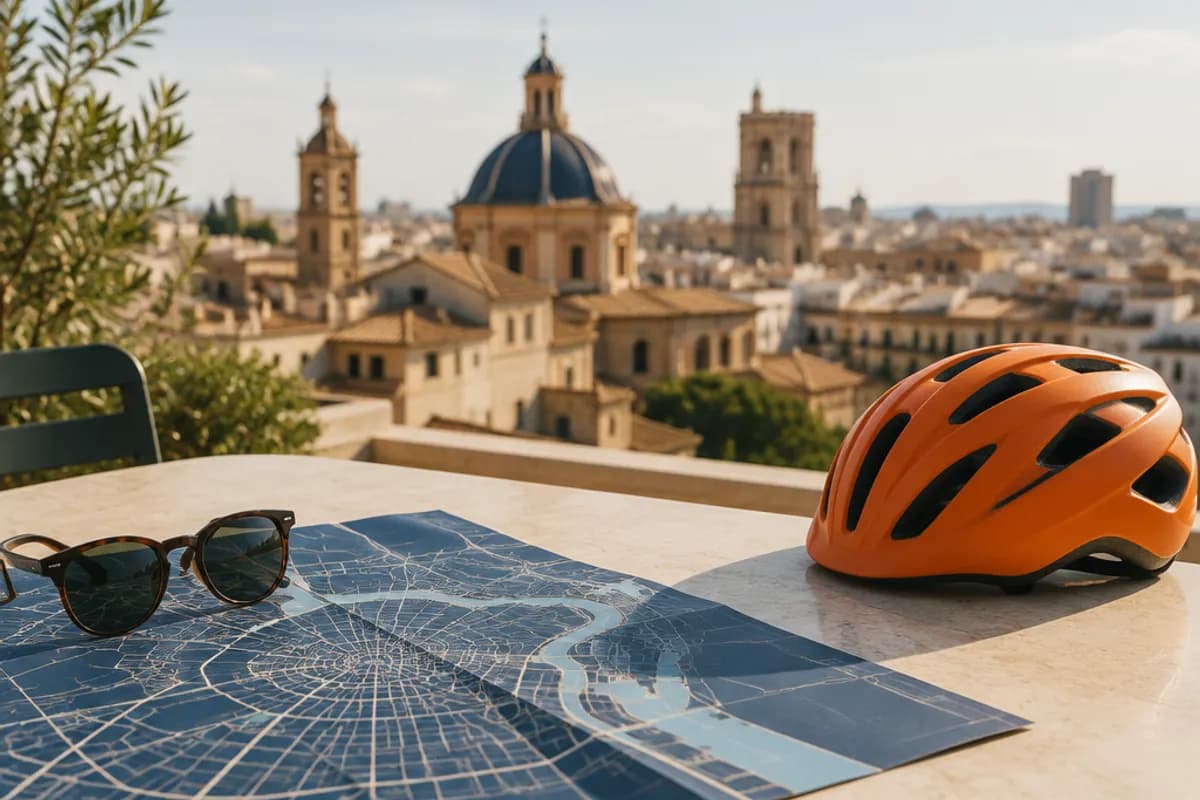
You can also choose the more eco-friendly option of renting a bike through a private company, or through the city council’s online Valenbisi service.
Valencia also has an extensive network of cycle lanes.
The main feature of the Fallas Festivity, a tradition of communities in Valencia and its diaspora celebrating the coming of spring, is the giant falla. The falla is a monument made up of ninots (caricature pieces) created by local artists and craftspeople that provides a commentary on current social issues.
UNESCOSource: UNESCO, Valencia Fallas festivity, Intangible Cultural Heritage list (inscribed 2016)
Top attractions in Valencia
There is so much to see and do in Valencia, that it’s not so much a question of what can I do, rather what you can leave out.
The weather in Valencia is mild for most of the year, although heavy rain can still happen, so check the forecast before you travel.
Let’s take a look at what are the top 5 things to do in Valencia:
Valencia old town
It goes without saying that the old town of Valencia should be a stop on your tour of the city. As well as seeing the Quart and Serranos Towers (Torres de Serranos y Quart) and Plaza de la Almoina (as previously mentioned), make sure you don’t miss the other architectural masterpieces on offer.
These include the cathedral, the Northern Railway Station (Estación del Norte), Micalet/Miguelete tower, the bullring (plaza de toros), the Silk Market (Lonja de la Seda), the main square (Plaza del Ayuntamiento), the central market (Mercado Central), or the district of Ruzafa.
Discover Valencia’s wildlife
If you are a nature lover, you will fall in love with Turia Gardens (Jardín del Turia), a lovely and peaceful green space just a few minutes away from the Old Town.
This long stretch of greenery spans nearly 5 and a half miles, and used to be the riverbed of the Turia river, which was diverted south of the city after the 1957 flood, known as the “Gran Riada”.
However, if you really want to escape the hustle and bustle of city life, you should ideally visit Albufera Natural Park, which is the perfect place to watch the sunset.
Furthermore, you can go on a boat trip around the park’s lagoon.
Other honourable mentions have to go to the Oceanogràfic, which is the largest aquarium in Europe, and also Bioparc, which is an animal park that stands out from the rest, due to its wide variety of species, and state-of-the-art facilities on show; you won’t be able to miss them.
Get yourself involved in sport
The city also offers extensive training to athletes and keen sportspeople, who can visit the Mestalla stadium, the home of Valencia Football Club, which is just a few train stops away from the Old Town.
Also, with a bit of luck, you never know, you might even be able to watch a live game.
Elsewhere, the Valencian Basketball Club hosts regular games which are open to everyone. Since October 2025, the team has played at the new Roig Arena.
Las Fallas festival
Fallas is the perfect time to visit Valencia. This highly popular festival takes place 1-19 March, however, the main events take place from 15th onwards.
During this time, you can enjoy all the sites the city has to offer, whilst being part of this unique festival.
Amazing structures are constructed using dolls, which are set alight on the final day.
The main stars of this festival are the “falleros” and “falleras”, who, dressed in their traditional outfits, take part in various activities up and down the Valencian streets.
With the Valencian Community, alongside the tourists who visit this time of year, there is a wonderful atmosphere that surrounds the city.
Try some traditional Spanish food
Spain is renowned for its excellent gastronomy, and one of its most famous dishes actually comes from Valencia itself.
Paella, a widely recognised dish worldwide, has certainly grown popular with people from all walks of life, but without a doubt, Valencian paella remains distinct from the rest.
In the traditional recipe, you will find chicken and rabbit as the main components.
Despite this recipe being the traditional and historical one, you will also come across seafood paella in most restaurants in Valencia.
Typical restaurants
We recommend the seaside restaurants of Llevant or Casa Carmela if you are wanting to try a proper paella, not just a bit of rice mixed with other bits and bobs.
It is tradition on Sundays to go to one of the many restaurants in El Palmar. It is a small fishing village, located in the centre of La Albufera.
Here, you can discover the old fishermen’s houses and farmhouses.
If you are in the area, we would recommend that you dine at either one of the El Redolí or El Graner restaurants, where you can try the famous “all i pebre”, an eel stew.
Must try local specialities
Regardless of the fact that paella is the most popular dish, we can’t forget the traditional Valencian snack, “orxata”, which consists of a tigernut-based drink, which is normally accompanied by a pastry, locally known as “fartons”.
Anyone that comes to Valencia, has to try the local alcoholic drinks we have on offer.
These include cazalla (a liqueur), mistela (a dessert wine), Cremaet (a coffee with sugar, lemon, rum, and cinnamon), and Agua de Valencia (a cocktail made with cava, orange juice, vodka, and gin).
The cocktail is a must-have, as it includes one of Valencia’s best-known products: oranges.
- El Carmen and the city centre
- Ruzafa for nightlife
- Plaza de Honduras and Plaza del Cedro
- Malvarrosa
- The area around the City of Arts and Sciences
Where to stay in Valencia
There is a wide range of hotels on offer in Valencia. We recommend you tailor your choice based off of your plans.
However, as previously mentioned, the city is well-connected, allowing you to get to wherever in a flash.
Therefore, the area in which you decide to stay, really depends on the vibe that suits you.
The following are some suggestions of the areas in which you could stay:
- The El Carmen area, and city centre (both are areas which have an ideal location, are very beautiful, and also quite lively).
- The student area, which includes the areas Amistad, Benimaclet, and Ciudad Jardín.
- The main areas for nightlife are Ruzafa, plaza de Honduras, plaza del Cedro, or El Carmen.
- If you are looking for a bit of peace and quiet, we recommend that you explore the following areas: Malvarrosa, and the surrounding area of the City of Arts and Sciences.
If you have managed to make it to the end of this article without booking your ticket, we recommend you return to it later and give it another read.
Contact us for a free, no‑obligation quote.
Call us at
Office address
Calle Dr. Ferran, 13, 46021 Valencia, Spain