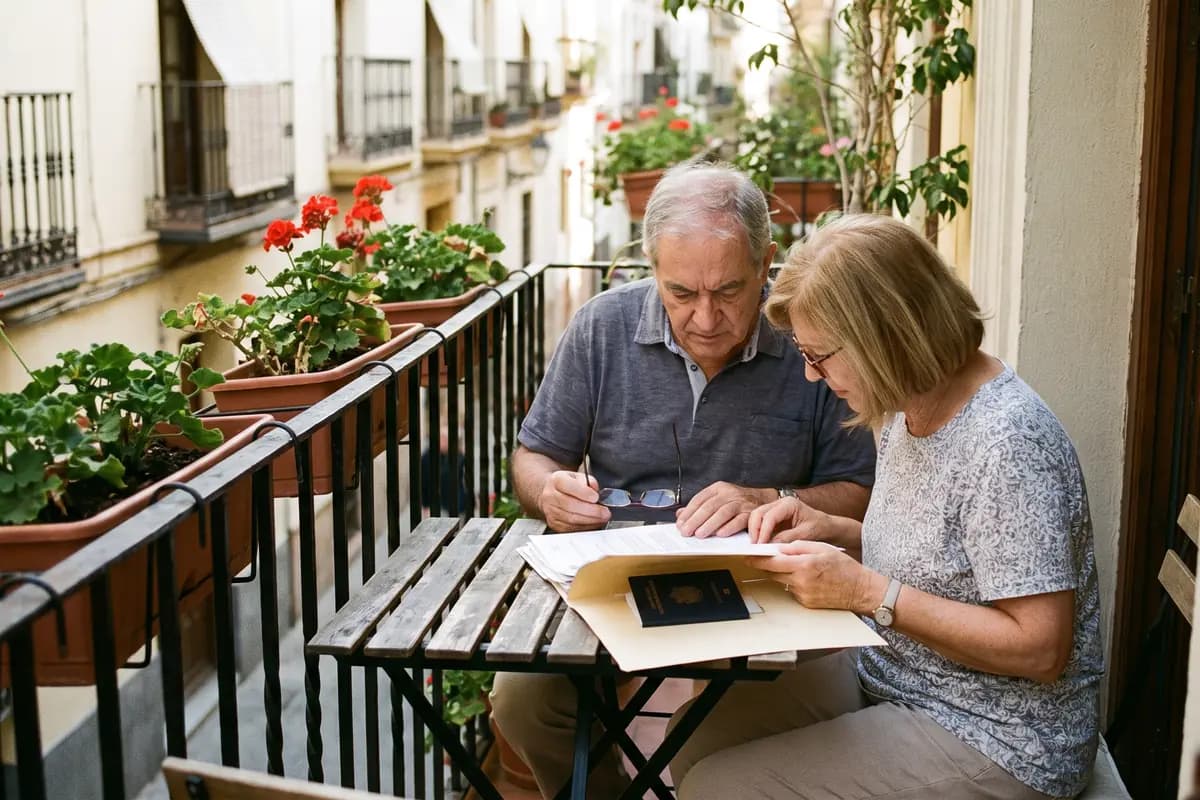
What does a foreigner need to buy property in Spain?
Buying property in Spain as a foreigner takes a NIE, a way of paying the price that can be traced, and, if you will not sign in person, a power of attorney that has been apostilled and translated into Spanish.
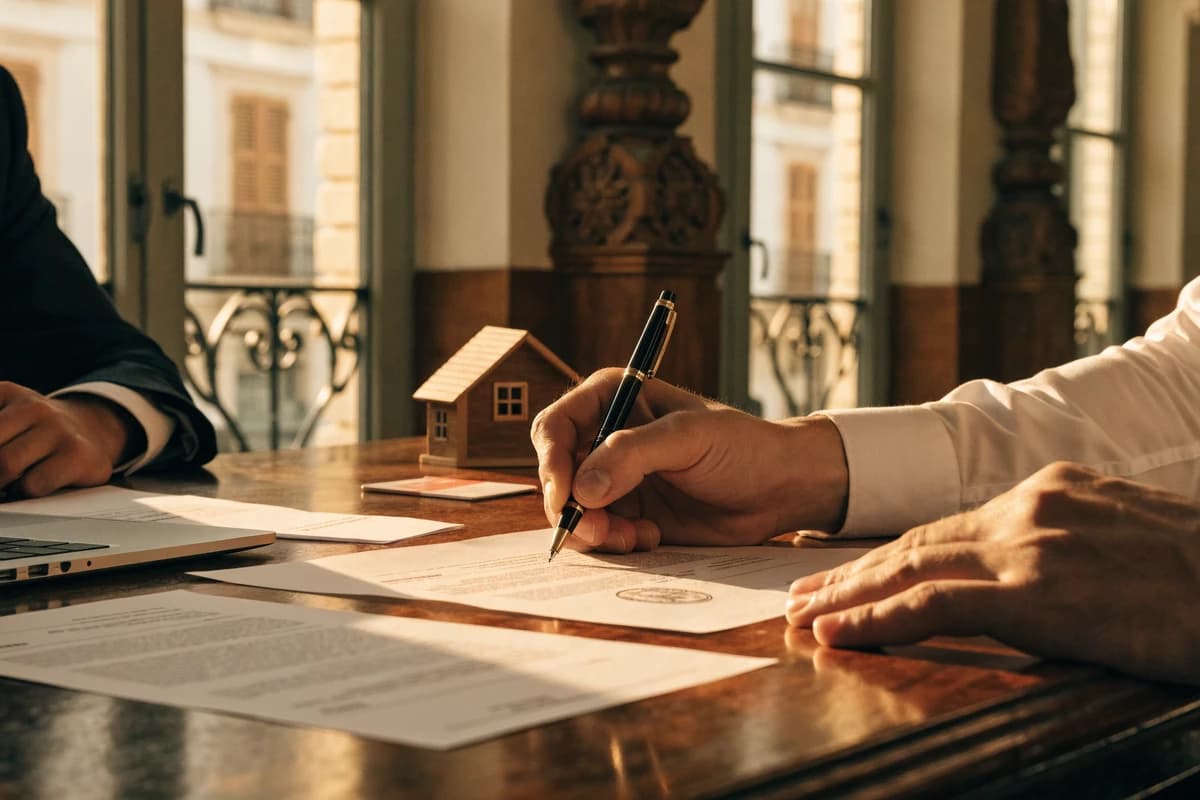
The sale is signed as a public deed (escritura) before a Spanish notary, who must make sure everyone understands what they are signing. If you do not understand Spanish and the notary cannot explain the deed in your language, the Reglamento Notarial calls for an interpreter you designate, and having one in the room protects you.
What a foreign buyer needs before signing
The route from offer to keys is the same for residents and foreigners; what changes is the paperwork from abroad and the language.
- Offer and reservation. Once the seller accepts, a small deposit usually takes the property off the market while checks are made.
- Checks. Your lawyer requests the nota simple from the Registro de la Propiedad, which shows the owner and any mortgages or charges, and checks taxes, community fees and planning status.
- Private contract. Most buyers then sign a private purchase contract with a larger deposit and a completion date. Read it in a language you understand before you sign; a translation of the contract is a small cost next to the deposit.
- Completion at the notary. The deed is signed, the price paid and the keys handed over. The taxes are then paid and the deed registered at the Land Registry, usually handled by your lawyer or a gestoría.
Foreign buyers are a large part of this market in our region. Many come from countries whose documents need an apostille and a translation before a Spanish notary can use them.
NIE and a Spanish bank account
You need a NIE (Número de Identidad de Extranjero) to sign the deed and pay the taxes on the purchase. It is the number the Policía Nacional assigns to foreigners with economic, professional or social interests in Spain.
According to the Policía Nacional's procedure page, you apply with form EX-15, either in Spain or from abroad through a Spanish consulate, and the procedure must be resolved within five days of the application entering the register. Appointment availability is another matter, so apply early.
Our post on sworn translation for your NIE or TIE explains when foreign documents come into it.
A Spanish bank account is not a legal condition for buying, but in practice it makes things simpler. The notary records how the price is paid, and paying from a Spanish account makes that straightforward.
Spanish banks ask for your NIE to open a non-resident account, which is one more reason to get it first. If you take a Spanish mortgage, the bank will ask for proof of income and tax returns from your country, which often need translating.
- Offer and reservation deposit
- Nota simple and legal checks
- NIE and a Spanish bank account
- Private contract with deposit
- Draft deed translated and reviewed
- Signing at the notary with your interpreter
Signing from abroad: powers of attorney
If you cannot travel for the signing, someone in Spain, usually your lawyer, can sign for you with a power of attorney. There are two common routes.
- A power signed before a notary in your country. In the UK, a notary public prepares and certifies it, and the Legalisation Office then adds the apostille; GOV.UK lists powers of attorney certified by a notary among the documents it can legalise. The UK, Ireland, the US, Canada and Australia are all parties to the Hague Apostille Convention (see the HCCH status table). The apostilled power then needs a translation into Spanish.
- A power signed at a Spanish consulate. Spanish consulates can authorise powers of attorney drafted in Spanish, which avoids the translation step. Ask your consulate how to book.
On translation, the rules leave some room. Article 37 of the Reglamento Hipotecario lets documents in a foreign language be translated, for Land Registry purposes, by the Oficina de Interpretación de Lenguas, by competent officials, or by a notary who answers for the translation.
In practice, most notaries and registries expect a sworn translation by a translator appointed by Spain's Ministry of Foreign Affairs (MAEC). Ask the notary which they need before you sign the power.
Ask your Spanish lawyer for the exact wording of the power too: a power that is too narrow can stop the signing, and one that is too broad gives away more than you need. Our page on UK power of attorney translation to Spanish explains the process.
At the notary: do I need an interpreter?
A Spanish notary does more than witness signatures. Under article 147 of the Reglamento Notarial, the notary drafts the deed according to the parties' common will and informs them of its value and scope.
Article 193 requires the notary to read the deed or let the parties read it, and to communicate its content to the extent needed for a full understanding of its scope and effects. The parties then state that they have been duly informed and give their free consent.
Article 150 deals with foreigners who do not understand Spanish. The notary can translate the deed orally if they know your language, and you can ask for a deed in two columns, Spanish and your language.
Where neither works, an interpreter designated by you takes part: they translate, declare that the translation matches the original and sign the deed.
In Valencia, deeds can also be drawn up in Valencian, the other official language, if the parties agree (article 149), so tell the notary which language you need.
Why bring your own interpreter rather than rely on the estate agent's bilingual staff? Because the agent is paid when the sale goes through, while an independent interpreter works only for you. Good preparation makes the signing smoother:
- ask the notary's office for the draft deed (borrador) a few days ahead and have it translated, so the signing is a check, not a first read;
- send the interpreter the draft, the nota simple and the private contract;
- agree the language pair and the expected length, usually one to two hours.
Accompanying an individual at a notary signing usually costs 60–100 € per hour. You will find the details on our interpreting services page.
Where the parties, or any of them, do not sufficiently know the language in which the public instrument is drawn up, and the notary cannot convey its content personally, an interpreter designated for that purpose by the party who does not know the language must take part.
Reglamento Notarial, Article 150Source: BOE, Reglamento Notarial, article 150 (trans.)
Costs and taxes
Budget for the following on top of the price, and ask your lawyer for a written estimate.
- Transfer tax on resale homes (Impuesto sobre Transmisiones Patrimoniales), a regional tax. The Generalitat changed the rates in 2026, so check the current figure with the Agència Tributària Valenciana or your lawyer.
- VAT and stamp duty on new builds (IVA and Actos Jurídicos Documentados) instead of transfer tax.
- Notary and Land Registry fees, which follow official scales.
- Lawyer, gestoría and valuation, plus mortgage costs if you borrow.
- Translation and interpreting: a sworn translation costs about 70 € per page (60–70 € per page); we reply within 8 working hours and deliver the certified digital version in 2–3 working days.
Once you own the home, there are yearly costs too: the local property tax (IBI), community fees and, for non-residents, Spanish non-resident income tax. Expats juggling several of these procedures will find more in our article on document translations for expats in Valencia.
Frequently asked questions
Can I buy property in Spain without a NIE?
In practice, no. The notary, the tax office and the Land Registry need your NIE to complete the purchase and register you as the owner. You can apply for it from abroad through a Spanish consulate.
Does the notary provide the interpreter?
The notary can translate orally if they know your language. Otherwise, article 150 of the Reglamento Notarial says the interpreter is a person designated by the party who does not understand the language, so you arrange and pay for your own.
Can the deed be written in English and Spanish?
Yes. Article 150 lets a foreign party ask for the deed in two columns, Spanish and their language, even if they speak Spanish well. Tell the notary early so the draft is prepared that way.
Does my UK power of attorney need a sworn translation?
Most Spanish notaries and registries expect the apostilled power to come with a sworn translation into Spanish. Article 37 of the Reglamento Hipotecario also allows other routes, such as a translation by the notary, so ask the notary what they need.
Can the estate agent interpret for me at the signing?
Nothing stops you, but the agent has an interest in the sale going through. An independent interpreter works only for you and can raise questions on your behalf before you sign.
Can I get the draft deed translated before signing?
Yes. Ask the notary's office for the draft a few days before and send it to us. We reply within 8 working hours with a price and deadline.