Need a medical interpreter in Valencia?
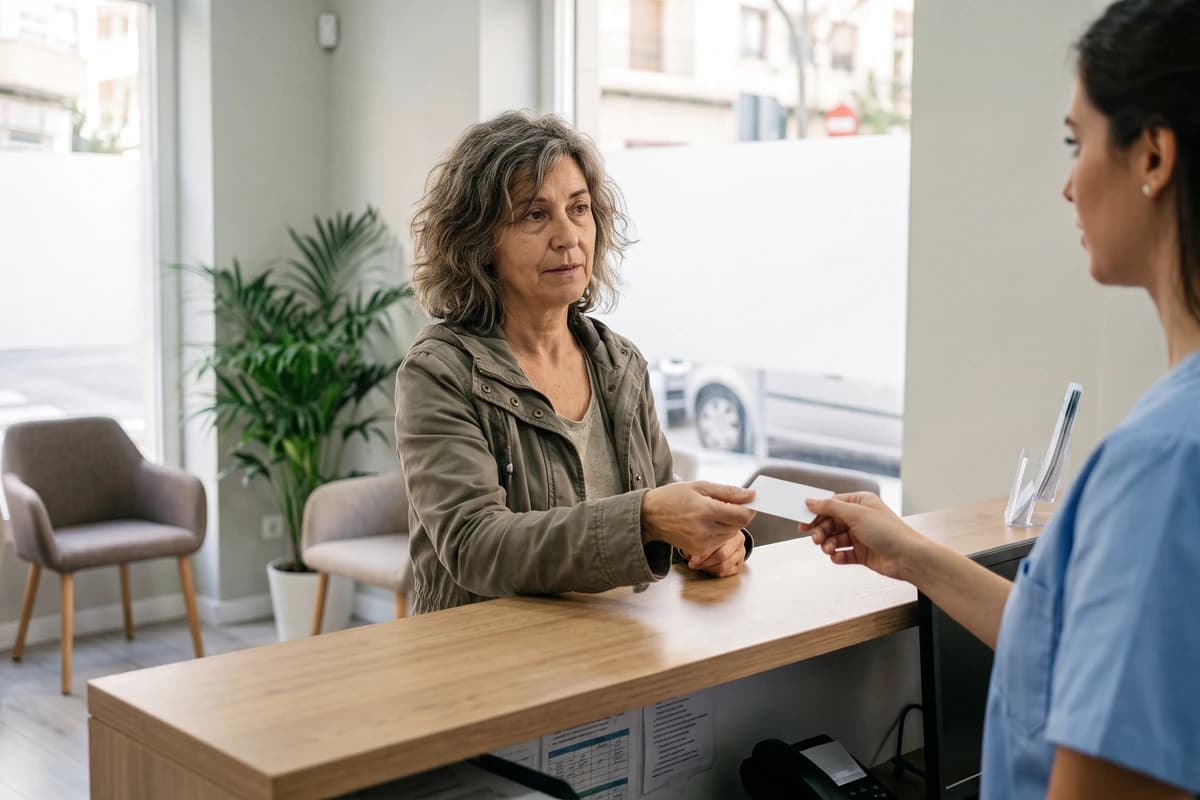
BeTranslated provides medical interpreters in Valencia for English-speaking expats, visitors and their families. An interpreter comes with you to a GP, a specialist, a hospital appointment or the dentist and translates both ways, so you and the doctor understand each other.
Tell us the date, place, speciality and languages, and we reply within 8 working hours. You can request a quote or read about our medical interpreting service (in Spanish).
What a medical interpreter does
Doctors in Valencia work in Spanish and Valencian, and medical conversations are where misunderstandings matter most. The interpreter translates what the doctor says and what you say, keeps everything confidential and does not give medical advice. Their job is to make sure each question is asked and each answer is understood.
- In person: at the health centre, the hospital, a private clinic or the dentist.
- By phone or video: for a short consultation, a result review or a follow-up, see remote interpreting.
- Over a course of treatment: the same interpreter can follow you from one appointment to the next, so nobody has to explain your history again.
More on the service is on our interpreting services page.
Will the health centre provide an interpreter?
Do not count on it. You can bring your own interpreter to the GP, a specialist or the dentist, and that is the usual solution for expats who do not yet speak Spanish well enough for a medical conversation.
How to prepare the appointment
- bring a list of your medicines with their active ingredients, not only brand names, which differ between countries;
- bring translated copies of recent reports or test results;
- write down your questions beforehand, so the interpreter can make sure each one is answered;
- tell the interpreter the speciality in advance, so they can prepare the vocabulary.
Translating medical reports
Bringing your medical history with you saves repeated tests and gives your new GP the full picture: discharge summaries, specialist letters, test results, vaccination records and prescriptions. For your doctor, a professional medical translation is usually what you need.
A sworn translation by a translator appointed by Spain's Ministry of Foreign Affairs (MAEC) is only needed when a Spanish authority receives the document.
Examples include a disability assessment, an insurance claim, a court case or a visa application, where the London consulate asks for a sworn translation of medical certificates not issued in Spanish. A sworn translation costs 70 € for a single page, with a lower price per page for several pages.
If you are dealing with other post-Brexit paperwork, our post on red tape in Spain after Brexit covers residency and the TIE.
Before the appointment: how healthcare works in Valencia
Your access to care depends on your status. Residents who work or are self-employed, and UK State Pension holders with an S1 form, can use the public system, which the Conselleria de Sanitat runs in the Comunitat Valenciana.
Others rely on private insurance or, after a year of residence, can apply to join the public scheme. The GOV.UK page on healthcare in Spain sets out the three routes:
- Public healthcare through work or a pension. If you work or are self-employed in Spain, you are entitled to state healthcare on the same basis as a Spanish worker. UK State Pension holders may be entitled to Spanish state healthcare paid for by the UK, through the S1 form.
- Private insurance. Visa holders who do not work in Spain, such as non-lucrative visa holders, need private cover. GOV.UK says that if you have lived in Spain for less than a year and cannot get healthcare cover, you need private health insurance.
- Joining the public scheme later. After more than a year of residence you can apply to join the public health insurance scheme, paying a monthly fee. The Conselleria de Sanitat lists access through its own convenio especial (special agreement) among its procedures.
Many residents combine both: the public system for their GP and hospital care, and private insurance for faster specialist appointments.
- Through work, self-employment or an S1
- SIP card from your local health centre
- GP and hospital care
- After a year of residence: pay-in scheme
- Needed for most non-working visas
- Insurer authorised to operate in Spain
- Cover of all public-system risks for the non-lucrative visa
- Often kept alongside public care
Registering: padrón and the SIP card
The padrón is the municipal register of residents. You sign up at your town hall, and the certificate it issues (certificado de empadronamiento) is asked for in many procedures, including healthcare.
GOV.UK's Living in Spain page tells British residents to register on the padrón municipal at their local town hall. Take your passport or NIE and proof of your address, such as a rental contract or a purchase deed. Each town hall sets its own list and appointment system, so check its website first.
The SIP card (tarjeta sanitaria SIP) is your health card in the Comunitat Valenciana. According to the Conselleria's health card FAQ, if you are insured through social security you go to the health centre nearest your home with your identity document (DNI or NIE).
The Conselleria recommends bringing a recent padrón certificate and the document from the INSS (the Spanish social security institute) that proves your right to healthcare. With a digital certificate or Cl@ve, you can start the registration online (see the SIP card procedures). The SIP card is valid throughout Spain.
- Register on the padrón at your town hall
- Get your Spanish social security number (INSS or S1 registration)
- Go to your health centre with your NIE, padrón certificate and INSS document
- Receive your SIP card
UK pensioners and the S1
For British pensioners, the S1 form is the route into Spanish public healthcare. GOV.UK sets out the steps:
- request the S1 application form by phone from NHS Overseas Healthcare Services (contact details on the GOV.UK healthcare page);
- register the S1 with the INSS in Spain;
- wait for the INSS to send you a Spanish social security number by post;
- take it to your health centre to get your medical card, which in the Comunitat Valenciana is the SIP card.
The S1 also helps with residence: the Spanish Consulate General in London accepts the receipt for registration of the S1 as proof of health cover for the non-lucrative visa.
When you get your S1 form, you must register it with the INSS.
UK GovernmentSource: GOV.UK, Healthcare in Spain
Insurance for visas
Health insurance is a condition for most Spanish residence visas. Article 62 of Ley 14/2013 asks digital nomad visa applicants for public insurance or private health insurance with an insurer authorised to operate in Spain.
For the non-lucrative visa, the London consulate asks for a policy that covers all the risks insured by Spain's public health system. Our post on non-lucrative and digital nomad visa documents covers the rest of the file.
Frequently asked questions
Can I bring my own interpreter to a doctor's appointment in Valencia?
Yes. You can bring an interpreter to a GP, a specialist, a hospital appointment or the dentist. Tell us the date, place, speciality and languages when you ask for a quote.
Can an interpreter join a phone or video consultation?
Yes. For a short consultation, remote interpreting can be enough.
Do my medical reports need a sworn translation?
Not for your doctor, who needs an accurate medical translation. A sworn translation by a MAEC-appointed translator is needed when an authority receives the report, such as a consulate, a court or an assessment board.
Can I get a SIP card without being on the padrón?
The Conselleria de Sanitat recommends bringing a recent padrón certificate when you register at the health centre, so register at the town hall first. In a different situation, for example without healthcare coverage, its FAQ tells you to ask the health centre to refer you to its social worker.
Can I register for the SIP card online?
Yes, if you have a digital certificate or Cl@ve; you then collect the card at your health centre.
Is the SIP card valid outside the Comunitat Valenciana?
Yes. The Conselleria de Sanitat says the SIP card is valid throughout Spain.